Reliable Hot Water Diagnostics for Queens Homes
Hot water is essential to modern household hygiene, cooking, and sanitation. When an appliance suddenly stops delivering hot water, property owners face immediate disruption. When calling for water heater repair Ditmars-Steinway Queens, homeowners and building managers need clear answers: is the failure a simple electro-mechanical component that can be repaired within an hour, or has the storage vessel ruptured, necessitating equipment replacement?
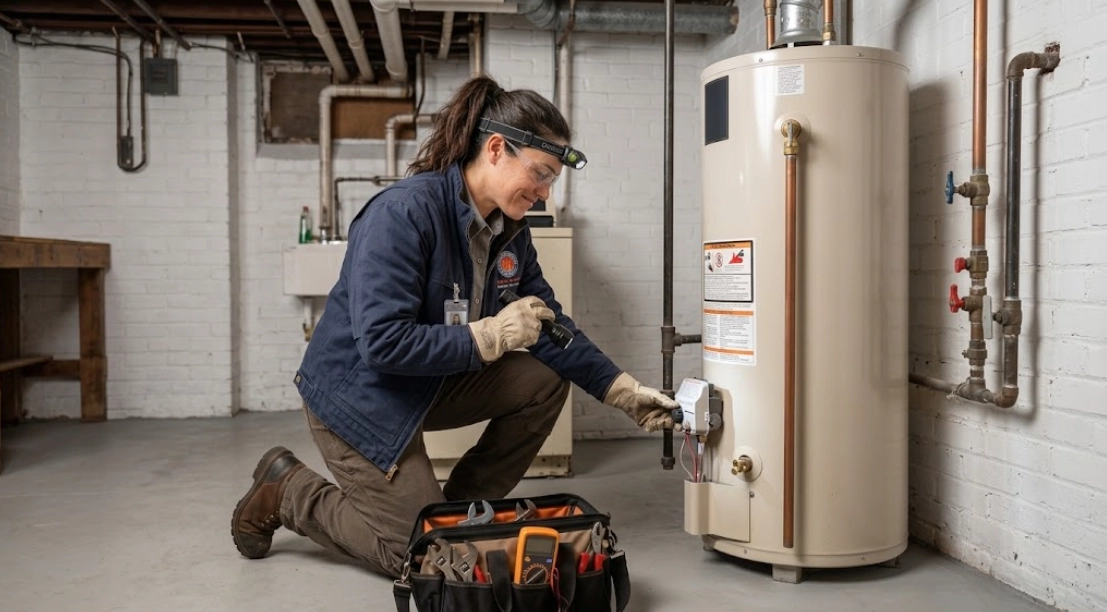
Common Water Heater Symptoms and Technical Causes
Whether your property uses a traditional atmospheric natural gas tank, an electric storage heater, or an indirect tank connected to your central heating plant, our technicians isolate common mechanical failures:
1. Total Loss of Hot Water
A sudden cold shower usually indicates a safety lockout. In natural gas water heaters, a clogged pilot orifice, oxidized thermocouple, or failing thermopile prevents the main gas valve from energizing. In electric units, high-temperature limit switches trip or upper and lower submerged heating elements burn out due to mineral buildup.
2. Inconsistent or Lukewarm Water Temperature
When hot water turns lukewarm after only two or three minutes of use, the internal cold water dip tube has likely fractured. The dip tube is a plastic tube that channels incoming cold city water to the very bottom of the tank so it heats before rising. When it disintegrates, incoming cold water dilutes the hot water directly at the top discharge port.
3. Leaks and Water Pooling Around the Base
Water under the heater requires immediate assessment. If water is discharging through the copper pipe connected to the Temperature and Pressure (T&P) relief valve, the system may be experiencing dangerous thermal expansion or over-pressurization. If the leak originates from corroded dielectric unions or the brass drain valve, simple pipe repairs will resolve the issue. If water is seeping through the metal jacket insulation, the inner steel tank has corroded through, and the heater must be decommissioned. When moisture spreads into finished walls or floors, our leak detection service pinpoints hidden piping leaks.
4. Rumbling, Popping, and Popping Sounds
Deep kettle sounds emanating from a water heater indicate severe sediment buildup. Minerals naturally precipitate out of heated water and settle as a thick limestone layer across the bottom of the tank. As the burner fires through this sediment crust, trapped water boils into steam bubbles that pop violently, stressing the steel bottom and accelerating tank failure.
No Hot Water or Leaking Heater?
Our technicians triage symptoms over the phone and provide straightforward repair options for Ditmars-Steinway residents.
Gas vs. Electric vs. Indirect Water Heating Systems
Properties across Northwest Queens utilize diverse hot water heating equipment:
- Atmospheric Gas Water Heaters: The most prevalent system in Queens row houses. These rely on natural chimney draft to exhaust combustion gases through a metal drafthood into a masonry flue.
- Power-Vent Water Heaters: Equipped with an electric blower fan that exhausts combustion gases through PVC or polypropylene pipe horizontally through an exterior wall, ideal where chimney access is restricted.
- Indirect Water Heaters: Highly efficient storage tanks with internal stainless-steel or copper heat exchanger coils connected directly to your central boiler repair in Ditmars-Steinway system as an independent heating zone.
Safety First: Scald Prevention and Relief Valves
Water heater thermostats should generally be set to 120°F. Water temperatures exceeding 130°F can cause severe epidermal burns within seconds, particularly to young children and elderly residents. Furthermore, every water heater must feature a properly rated T&P relief valve terminating within 6 inches of the floor to safely vent boiling water if internal temperatures exceed 210°F or pressure exceeds 150 PSI.
Frequently Asked Questions About Water Heater Repair
The thermocouple or thermopile is designed to generate a small millivolt electrical current when bathed in the pilot flame. If the tip is coated with carbon, out of alignment, or electrically defective, it signals the gas control valve that the flame has gone out, immediately cutting off the gas supply for safety.
The anode rod is a magnesium or aluminum rod suspended inside the tank that attracts corrosive galvanic action away from the steel tank walls. Once the anode rod is completely depleted (usually within 3 to 5 years), corrosive minerals begin attacking the tank shell, leading to irreversible tank failure.
Traditional storage tank water heaters generally last between 8 and 12 years. Regular annual tank flushing and maintaining thermal expansion controls extend operational lifespan. Indirect tanks connected to boilers can last 15 to 25 years or longer due to stainless-steel construction.
Speak Directly With a Local Plumber
Restore reliable hot water to your Ditmars-Steinway property. Call today for fast, honest service.