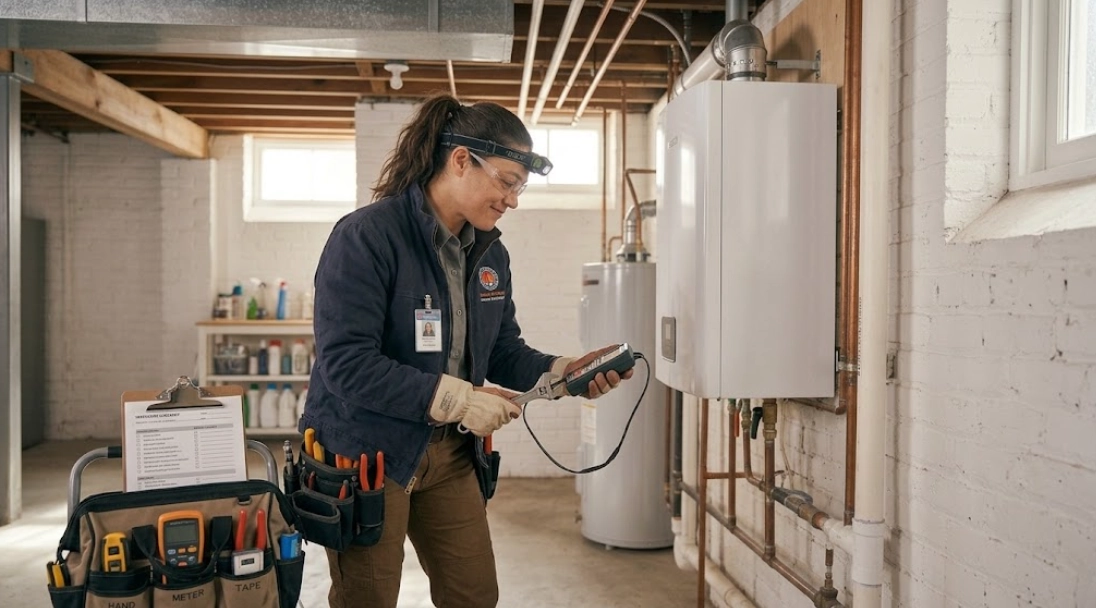
Dedicated Heating Diagnostics in Ditmars-Steinway
Heating systems in Northwest Queens operate under conditions unique to New York City's architectural history. From the early 20th-century brick row houses along Ditmars Boulevard to multi-family pre-war apartment buildings near the historic Steinway & Sons factory and single-family dwellings toward Astoria Heights, local homes depend heavily on legacy cast-iron boilers. Delivering reliable boiler repair Ditmars-Steinway Queens property owners can count on requires deep familiarity with both classic low-pressure single-pipe steam systems and modern hydronic baseboard setups.
When your heating system fails during a January cold snap, the consequences extend beyond mere discomfort. Unheated buildings risk frozen domestic water lines, cracked radiator bodies, and potential NYC housing code violations for landlords. Our technical team approaches every heating call with systematic diagnostics, isolating electrical, combustion, pressure, and mechanical faults rather than guessing or recommending premature equipment condemnation.
Common Boiler Failures in Queens Properties
Boilers are sophisticated, pressurized appliances combining high-voltage electricity, combustible fuel, and boiling water. Over decades of operation, sediment buildup, mineral scaling, and wear on electro-mechanical components manifest in several distinct failure symptoms:
No Heat or Intermittent Firing
If you face a complete no heat boiler repair Ditmars-Steinway Queens situation, the fault often traces to a locked-out primary ignition control, a failed pilot assembly, a tripped low-water cutoff, or an open high-limit thermostat.
Banging Radiators & Water Hammer
Steam systems that hammer violently suffer from improper condensate return. Pitch imbalances in horizontal riser pipes, waterlogged air vents, or an overfilled boiler create turbulent collisions between steam and pooled water.
Boiler Leaks & Pressure Spikes
Water pooling beneath a boiler can indicate a weeping pressure relief valve, compromised supply nipples, a failing circulator flange gasket, or thermal stress cracks across cast-iron boiler sections.
Short-Cycling & Poor Distribution
Boilers that ignite, run for two minutes, and immediately shut down are short-cycling. This points toward miscalibrated pressuretrol settings, blocked flue airways, or heavy limescale insulating the heat exchanger.
Is Your Heating Boiler Malfunctioning?
Speak directly with a heating technician to troubleshoot symptoms and discuss emergency service in Ditmars-Steinway.
Steam vs. Hydronic Hot-Water Boilers
Understanding your heating system's operational principle is fundamental to diagnosing issues effectively. Most residential structures across Ditmars and Steinway employ one of two primary heating configurations:
1. Low-Pressure Steam Boilers
For homeowners seeking steam boiler repair Ditmars-Steinway Queens, the system operates by boiling water inside the vessel to generate steam at low pressures (typically between 0.5 and 2.0 PSI). The expanding steam rises through vertical building risers, enters cast-iron radiators, expels air via radiator vents, and condenses back into liquid water. Crucial components include:
- The Gauge Glass: Displays the operational water level, which should generally hover at the midpoint. Discolored or surging water indicates internal oil or sediment contamination.
- The Low-Water Cutoff (LWCO): An indispensable safety mechanism that cuts burner power if water drops dangerously low, protecting against catastrophic dry firing.
- The Pressuretrol: Regulates the steam cut-in and cut-out pressure to prevent excessive pressure buildup within the building piping.
- The Hartford Loop: An engineered piping configuration that prevents boiler water from siphoning back into return lines in the event of a line leak.
2. Closed-Loop Hydronic Boilers
Properties utilizing hot water boiler repair Ditmars-Steinway Queens circulate heated water (usually between 160°F and 180°F) through copper fin-tube baseboards, radiators, or radiant in-floor manifolds. Key diagnostic elements include:
- Circulator Pumps: Centrifugal impellers that mechanically push hot water through designated heating zones. Worn bearings or failed capacitors lead to cold zones despite a hot boiler.
- Diaphragm Expansion Tanks: Accommodate the thermal expansion of water as it warms. A waterlogged tank causes pressure relief valves to discharge water periodically onto the floor.
- Automatic Air Eliminators: Purge dissolved micro-bubbles from the system, preventing air-locks that starve upper-floor radiators of heat.
Natural Gas Heating Safety & Combustion Controls
Most residential boilers throughout Queens rely on natural gas supplied through street mains. Servicing a gas boiler repair Ditmars-Steinway Queens system requires stringent adherence to safety protocols. Our technicians inspect the gas train, burner tubes, thermocouple or flame-rectification sensors, 24V gas control valves, and draft hoods. We verify that flue gases vent completely up the masonry chimney without spilling back into basement spaces.
If you smell the distinctive rotten-egg odor of natural gas or suspect a fuel leak near your boiler:
- Evacuate all occupants from the building immediately.
- Do not operate light switches, flashlights, cell phones, or landlines inside the building.
- Call 911 or the local gas utility emergency response team from a safe outdoor distance.
- Never attempt to troubleshoot gas line leaks or ignite pilot lights in an enclosed area with suspected gas accumulation.
Step-by-Step Diagnostic Visit: What Property Owners Can Expect
When you contact NY Plumbing because your boiler not working Ditmars-Steinway Queens home needs urgent help, our visit follows an orderly, non-destructive protocol:
- Operational & Electrical Safety Verification: We confirm line voltage, emergency switch operation, fuse integrity, and control transformer 24V secondary output.
- Safety Control Interlock Audit: We test the low-water cutoff mechanism, pressuretrol switch continuity, and spill switch / rollout switch conditions.
- Combustion & Gas Sequence Analysis: We inspect the pilot generator or electronic ignition module, spark ignition, and gas valve solenoid actuation.
- Water Level & Hydronic Pressure Evaluation: For steam boilers, we check the water sight glass and skim sediment if foaming is present; for hydronic systems, we calibrate system pressure to 12–15 PSI cold.
- Heat Distribution & Radiator Flow Assessment: We inspect distribution risers, zone valves, or radiator vents to ensure thermal energy moves unimpeded to every occupied room.
Repair vs. Replacement: Making a Cost-Effective Decision
While most heating emergencies can be resolved through component replacement—such as installing a new gas control valve, circulator pump, or pressure relief valve—certain conditions warrant evaluating a full boiler upgrade. If your existing cast-iron boiler exceeds 25 to 30 years in age, has cracked interior sections leaking water into the combustion chamber, or requires recurring emergency service each winter, replacing the unit may be substantially more cost-effective. Learn more about modern sizing and installation on our dedicated boiler replacement service page.
Preventive Maintenance to Prevent Mid-Winter Breakdowns
Routine maintenance is the most effective safeguard against heating failures. For Queens homeowners, seasonal practices include:
- Weekly LWCO Blowdown: Draining a bucket of water from the bottom blow-off valve on steam boilers clears accumulated rust sediment from the float chamber.
- Pre-Season Burner Cleaning: Removing dust, carbon deposits, and oxidation from burner ribbons ensures uniform, clean flame combustion.
- Radiator Vent Inspection: Replacing sticky, spitting radiator air vents restores proper steam balance before temperatures plummet. Read our steam heat and radiator repair guide for detailed advice.
Comprehensive Plumbing & Mechanical Solutions
In addition to heating systems, NY Plumbing provides complete residential plumbing solutions across Ditmars-Steinway:
- Water Heater Repair: Restoring domestic hot water for storage tanks and tankless equipment.
- Gas Line Repair & Inspection: Compliance testing, appliance connections, and Local Law 152 visual inspections.
- Leak Detection: Locating hidden water pipe leaks inside walls and ceilings without destructive demolition.
- Drain Cleaning: Mechanical clearing for sluggish kitchen sinks, showers, and branch lines.
- Sewer Line Repair: Diagnostic camera inspection and spot repairs for compromised building sewers.
Service Areas in Northwest Queens
We provide responsive service across Ditmars-Steinway, offering rapid boiler repair near Ditmars, reliable boiler repair near Steinway, and specialized heating service for boiler repair near Astoria Heights. For full details on housing configurations and coverage boundaries, visit our service areas overview or reach out through our contact page.
Frequently Asked Questions About Boiler Repair
Before calling, check that your emergency red heating switch (typically located at the top of the cellar stairs or on the boiler casing) is turned ON. Verify your thermostat is in HEAT mode with the temperature set 5 degrees above current room temperature. Check your electrical breaker box for tripped circuits, and on steam systems, glance at the glass tube to ensure water is visible. If these external factors are normal but the burner does not ignite, call a technician.
Clanking or banging (water hammer) occurs when steam hits pools of condensed water trapped in horizontal pipes or radiator bases. Radiators must pitch slightly downward toward their supply valve so water drains freely. Hissing is caused by radiator air vents expelling air; if a vent continues hissing indefinitely or sprays boiling water, its internal bi-metallic or alcohol float has failed and needs replacement.
A closed hydronic boiler should rarely require fresh water once filled and pressurized. Steam boilers naturally lose small amounts of water vapor through radiator vents and blowdown routines, typically requiring water replenishment every one to two weeks during peak winter. If an automatic feeder is introducing fresh water every day, you likely have a concealed return pipe leak beneath concrete or behind walls.
In hydronic systems, pressure spikes usually stem from a waterlogged expansion tank that can no longer absorb thermal expansion, or a leaking automatic pressure-reducing water feed valve continuously passing city water pressure into the boiler. When pressure reaches 30 PSI, the safety relief valve will discharge water onto the floor.
Speak Directly With a Local Heating Professional
Don't spend another cold night with an unreliable heating system. Call NY Plumbing for straightforward diagnostics in Ditmars-Steinway.